


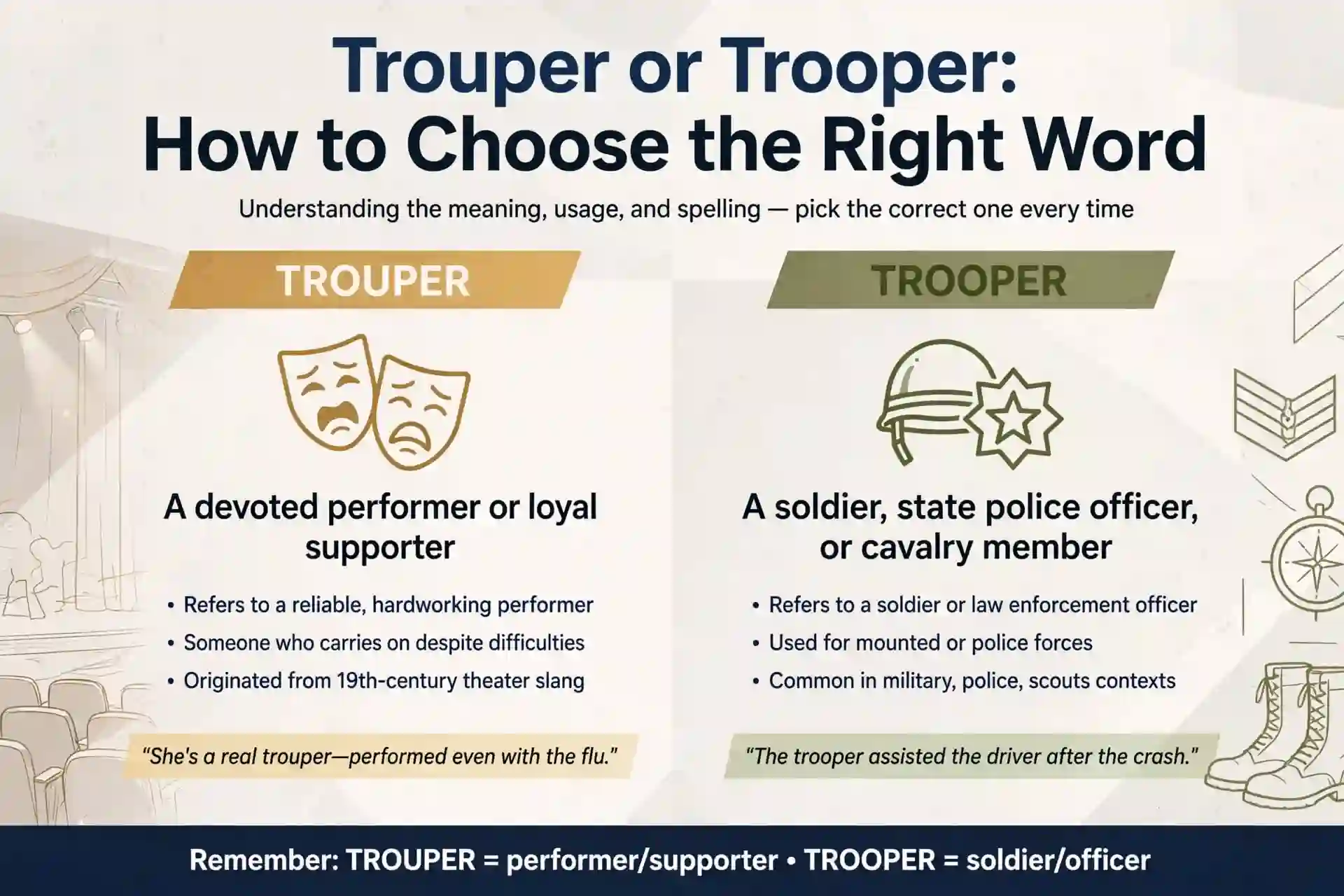
When it comes to English spelling, some words sound alike but have very different meanings. Trouper vs Trooper is a common example that confuses many writers. Both words are correct, but you cannot use them in the same way. “Trouper” describes someone who stays strong, works hard, and keeps going during difficult times. “Trooper” usually refers to a soldier, police officer, or member of a uniformed group. Knowing the difference helps you avoid spelling mistakes in emails, articles, school assignments, and everyday conversations. This guide explains both words, their meanings, origins, grammar rules, and practical uses. You will also find simple examples and tips to help you choose the right word.
Trouper vs trooper: Which Word Is Correct?
Both words are correct in standard English. The right choice depends on the meaning you want to express. Each word has its own definition, history, and use in everyday writing.
A trouper is a person who shows courage, patience, and determination during a difficult situation. People often use this word to praise someone who refuses to give up.
A trooper usually refers to a soldier or a police officer. It can also describe a member of a military or organized group.
Look at these examples:
- Correct: She was a real trouper during the long journey.
- Correct: The state trooper stopped the speeding car.
- Correct: Everyone praised him for being a trouper.
- Correct: The trooper helped control traffic.
Both spellings are valid. The mistake happens when writers use one word in place of the other.
Remember this simple rule:
- Use trouper for a hardworking and determined person.
- Use trooper for a soldier or police officer.
The context of your sentence will help you choose the correct spelling.
What Does Trouper Mean?
The word “trouper” describes someone who remains cheerful, strong, and determined during difficult circumstances. It often refers to a person who continues working despite pain, tiredness, or problems.
People use this word as a compliment. It shows respect for someone’s effort and positive attitude.
For example:
- My sister was a real trouper during her exams.
- The team leader proved to be a trouper during the crisis.
- He was a trouper and finished the project despite feeling tired.
- Our grandmother is a trouper who never gives up.
The word can describe people in many situations. You do not need to work in a theater to be a trouper.
Origin and History of Trouper
The word “trouper” comes from “troupe.” A troupe is a group of performers, such as actors, dancers, or musicians.
In the past, traveling theater groups often performed in different towns and cities. Their members had to deal with long journeys, changing conditions, and demanding performance schedules.
A performer who continued working despite these challenges earned a reputation as a dependable member of the group. This idea helped develop the modern meaning of “trouper.”
How to Use Trouper in a Sentence
You can use “trouper” as a noun. It describes a person’s character or behavior.
Here are some common examples:
- She was a trouper when her plans suddenly changed.
- My father is a trouper who works hard for his family.
- The little boy was a trouper during his first day at school.
- Our coach remained a trouper throughout the season.
- He acted like a trouper when the project became difficult.
- The nurses were true troupers during the busy shift.
- My friend is a trouper who always supports others.
- Everyone called her a trouper after the difficult experience.
In these examples, the word describes determination and strength. It does not refer to a military or police position.
What Does Trooper Mean?
“Trooper” usually refers to a soldier or a police officer. It can describe someone who serves in a military unit or works in a state police organization.
The exact meaning depends on the situation and the country.
For example:
- The trooper checked the driver’s license.
- A trooper stood near the entrance.
- The army troopers prepared for their mission.
- The state trooper helped a family after an accident.
Origin and History of Trooper
The word “trooper” comes from “troop.” A troop is a group of soldiers, cavalry members, or other organized personnel.
The word developed from the idea of belonging to or serving in a troop. It became associated with military personnel, especially soldiers and cavalry members.
Over time, different countries adopted the term for specific military and law enforcement roles.
Today, you may hear “trooper” in news reports, police announcements, military discussions, and everyday conversations.
How to Use Trooper in a Sentence
Use “trooper” when referring to a military or police member. It can also describe a person who belongs to a specific uniformed organization.
Here are some examples:
- The trooper directed traffic near the highway.
- A state trooper arrived at the accident scene.
- The trooper checked the vehicle’s registration.
- The young trooper received an award for service.
- Two troopers guarded the entrance.
- The army troopers completed their training.
- A highway trooper helped the stranded driver.
- The trooper explained the safety rules.
Trouper vs Trooper: Main Differences Explained
The main difference between these words comes from their meanings and origins. Both have similar sounds, but they describe different things.
Understanding this difference will help you choose the right word in your writing.
| Feature | Trouper | Trooper |
| Meaning | A determined and dependable person | A soldier or police officer |
| Part of speech | Noun | Noun |
| Origin | Troupe | Troop |
| Common use | Praise and encouragement | Military and law enforcement |
| Example | She is a real trouper. | The trooper stopped the car. |
Difference in Meaning
“Trouper” describes a person’s attitude. It highlights courage, patience, and a willingness to continue despite challenges.
“Trooper” describes a role or membership. It usually identifies someone who serves in a military or police organization.
Compare these sentences:
- My brother is a trouper because he never gives up.
- My brother is a trooper in the state police.
Difference in Spelling
The spelling difference is small but important.
- Trouper: T-R-O-U-P-E-R
- Trooper: T-R-O-O-P-E-R
The first word contains “ou.” The second word contains “oo.”
You can connect “trouper” with “troupe” and “trooper” with “troop.” These related words make the spelling easier to remember.
When Should You Use Trouper or Trooper?
Choosing between these words becomes easy when you understand the situation. Think about the person or role you want to describe.
Use the following guidance to make the right choice.
Use Trouper for Someone Who Shows Determination
Choose “trouper” when you want to praise someone for staying strong during a difficult situation.
Examples:
- My mother was a trouper during the family emergency.
- You are a real trouper for completing the race.
- The workers were troupers during the busy season.
- She remained a trouper despite several setbacks.
Can Trooper Describe a Hardworking Person?
“Trooper” can sometimes describe someone who keeps going despite challenges, especially in informal American English.
For example:
- She’s a real trooper for working through the long day.
- He has been a trooper throughout the difficult trip.
This figurative use is common in everyday speech. It overlaps with the meaning of “trouper.”
However, “trouper” is also a traditional choice for praising a dependable performer or hardworking person. The two words can overlap in this informal sense, but their original meanings remain different.
Common Mistakes When Using trouper vs trooper
Writers often confuse these words because they sound alike. A small spelling difference can change the meaning of a sentence.
Learning common mistakes will help you avoid confusion.
Using Trooper When You Mean Trouper
Incorrect: My grandmother is a real trooper because she never gives up.
This sentence is understandable in informal English, where “trooper” can describe someone who perseveres. However, if you want to use the traditional word for a determined and dependable person, “trouper” is a good choice.
Preferred: My grandmother is a real trouper because she never gives up.
Using Trouper for a Police Officer
Incorrect: The state trouper stopped the speeding driver.
Correct: The state trooper stopped the speeding driver.
A state police officer is commonly called a state trooper. The word comes from “troop,” not “troupe.”
Confusing Their Origins
Some writers remember the meanings but forget which word comes from which root.
Use these simple connections:
- Troupe = a group of performers.
- Trouper = a dependable person who keeps going.
- Troop = a group of soldiers.
- Trooper = a soldier or police officer.
These word relationships make the spelling easier to remember.
Assuming One Word Is Incorrect
Both words are correct English words. Neither spelling is automatically wrong.
The problem occurs when you choose a word that does not match your intended meaning.
Always check the context before using either form.
Easy Tips to Remember the Difference of trouper vs trooper
You can remember the correct spelling without learning complicated grammar rules. Connect each word with another familiar word.
Connect Trouper With Troupe
A troupe is a group of performers. A trouper is traditionally someone who works hard and remains dependable, especially in a performing group.
Think of the letter “U” in both words.
- Troupe
- Trouper
This connection helps you remember the spelling.
Connect Trooper With Troop
A troop is a group of soldiers. A trooper is a member of a troop or a person who serves in a related military or police role.
Both words contain “OO.”
- Troop
- Trooper
This is an easy spelling trick.
Focus on the Meaning
Ask yourself one simple question before writing:
Am I describing someone’s attitude or their professional role?
- Attitude, effort, and determination: Trouper.
- Military or police role: Trooper.
This quick check can prevent many spelling errors.
Frequently Asked Questions
1. Is trouper vs trooper Correct?
Both words are correct. “Trouper” describes a determined and dependable person. “Trooper” usually refers to a soldier or police officer. Choose the word that matches your sentence.
2. What Does It Mean to Be a Trouper?
Being a trouper means staying strong and continuing to work despite challenges. People use this word to praise someone who shows patience, courage, and determination.
3. What Is a Trooper?
A trooper is usually a soldier or police officer. The term often appears in military and law enforcement settings. A state trooper, for example, is a member of a state police organization in the United States.
4. Can I Call Someone a Trooper as a Compliment?
Yes. In informal English, people sometimes call someone a trooper when they keep going through a difficult situation. It expresses appreciation for their strength and effort.
5. What Is the Difference Between trouper vs trooper?
“Trouper” comes from “troupe” and traditionally describes a dependable performer or determined person. “Trooper” comes from “troop” and usually describes a soldier or police officer.
6. How Can I Remember Trouper vs Trooper?
Connect “trouper” with “troupe,” which means a group of performers. Connect “trooper” with “troop,” which means a group of soldiers. These simple connections help you remember both spellings.
Conclusion: trouper vs trooper – Choose the Right Word
Understanding trouper vs trooper becomes simple when you learn the meaning behind each spelling. Both words are correct, but they serve different purposes. “Trouper” describes someone who stays strong, works hard, and continues despite difficult circumstances. It often works as a compliment for a dependable person. “Trooper” usually refers to a soldier, police officer, or member of an organized uniformed group.
Pay attention to the context whenever you write either word. Use “trouper” when you want to praise someone’s determination. Choose “trooper” when you refer to a military or police role. Practice with everyday examples and review your sentences before sharing them. These simple habits will help you use both words with confidence.
