


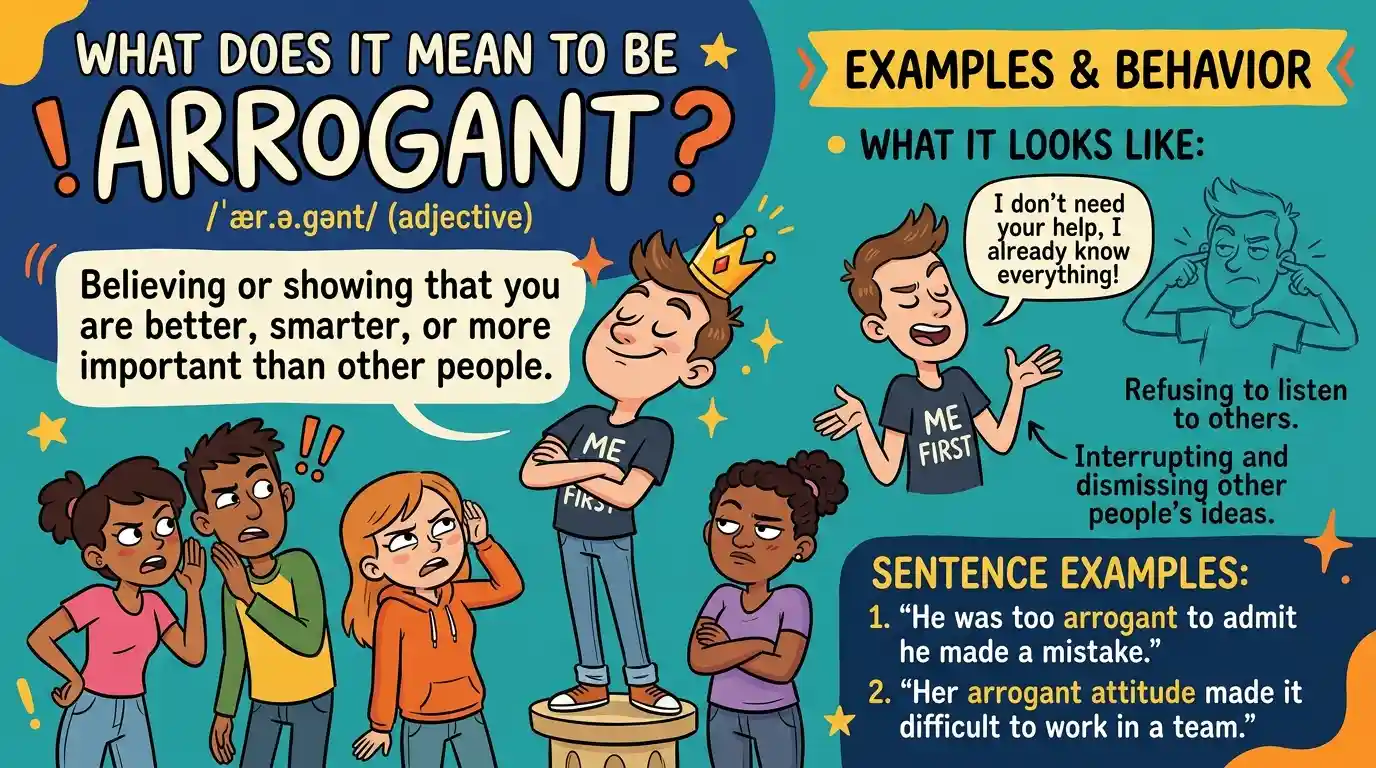
Have you ever received a message where someone called you “arrogant” and wondered what it really meant? Or have you seen this word in a TikTok comment, Instagram post, Snapchat conversation, or online discussion? The word arrogant is often used when people talk about someone’s attitude, behavior, or way of speaking. However, its meaning can sometimes be confusing, especially when you see it in a text message.
The arrogant definition and meaning in text refers to someone who acts as if they are better, smarter, more important, or more talented than other people. An arrogant person may talk down to others, ignore their opinions, or act as if they are always right. In simple words, an arrogant person thinks too highly of themselves and may show little respect for other people.
When someone calls you arrogant in a text, they usually mean that your words or behavior seem proud, rude, or superior. However, the exact meaning depends on the conversation. Sometimes, people use the word seriously during an argument. Other times, they may use it to describe someone who appears overly confident or unwilling to admit a mistake.
In this article, we will explain what arrogant means, its definition in text messages, how people use it in chats and on social media, and how to respond when someone calls you arrogant. You will also find simple examples, similar words, opposite meanings, and common situations to help you understand the word clearly.
What Does Arrogant Mean in Text?
Arrogant means acting as if you are better than other people.
In texting, people often use this word to describe someone who seems too proud, disrespectful, or full of themselves.
For example:
Person 1: “Nobody here is as smart as me.”
Person 2: “You sound arrogant.”
In this conversation, the second person thinks the first person is acting as if they are better than everyone else.
Here are some simple meanings of arrogant:
- Thinking you are better than others
- Acting like you know everything
- Looking down on other people
- Believing you are always right
- Showing too much pride
- Treating others as less important
Being confident is not the same as being arrogant. Confidence means believing in yourself. Arrogance means acting as if you are above other people.
Arrogant Definition in Simple English
The simple definition of arrogant is having an exaggerated sense of your own importance or abilities.
An arrogant person may believe they are more intelligent, successful, attractive, or talented than everyone around them.
For example, imagine a student who gets the highest marks in class. Feeling proud of the achievement is normal. But if the student says everyone else is stupid and only they deserve respect, that behavior may seem arrogant.
Here is another example:
“I never make mistakes. Everyone else should learn from me.”
This statement sounds arrogant because the speaker acts as if they are always right.
In simple English, arrogant describes a person who thinks too highly of themselves and may not respect other people’s feelings or opinions.
What Does It Mean When Someone Calls You Arrogant?
If someone calls you arrogant, they usually believe you are acting as if you are better than them or other people.
They may feel that you are:
- Talking down to them
- Ignoring their opinions
- Showing off your achievements
- Acting like you know everything
- Refusing to accept criticism
- Treating people disrespectfully
For example:
Friend: “You never listen when anyone gives you advice. You act like you know everything.”
You: “Are you saying I’m arrogant?”
In this situation, your friend may feel that you do not respect other people’s opinions.
However, being called arrogant does not automatically mean you are arrogant. People can misunderstand your tone, especially in text messages, where facial expressions and voice are missing.
It can help to ask what specific behavior made them feel that way.
Arrogant Meaning in Text Messages
In text messages, the word arrogant is often used to describe a person’s attitude or the tone of their message.
For example:
“That was an arrogant thing to say.”
This means the person thinks the message sounded proud, disrespectful, or superior.
Another example:
“Why are you being so arrogant?”
This means the sender feels that you are acting as if you are better than other people.
People may use the word in private messages, group chats, comments, or arguments. The tone can be serious, annoyed, or critical.
Remember that a short message can sometimes sound harsher than intended. Before deciding what someone means, consider the full conversation.
Examples of Arrogant in Texting
Here are some examples to help you understand how people use the word in everyday messages.
| Text Message | Meaning |
|---|---|
| “You sound arrogant.” | You seem to think you are better than others. |
| “Stop being so arrogant.” | Stop acting superior or overly proud. |
| “That was an arrogant reply.” | Your response sounded disrespectful or superior. |
| “He is talented but arrogant.” | He has skills but acts as if he is better than others. |
| “I don’t like his arrogant attitude.” | His behavior seems proud and disrespectful. |
| “She came across as arrogant.” | Her behavior gave people the impression that she felt superior. |
These examples show that arrogant is usually a negative word. It describes behavior that makes others feel ignored, disrespected, or less important.
Arrogant Meaning on Social Media
On social media, arrogant is often used in comments, captions, videos, and online discussions.
Someone may call a person arrogant if they brag about their money, looks, popularity, intelligence, or achievements.
For example, someone might post:
“I’m better than everyone in this room.”
A commenter may reply:
“That is such an arrogant attitude.”
The commenter means that the person seems to believe they are more important than everyone else.
The word can also appear in discussions about celebrities, influencers, athletes, or public figures. People may describe someone as arrogant if they appear dismissive, boastful, or unwilling to listen to others.
However, one post or comment may not show someone’s full personality. It is better to judge the specific behavior rather than make assumptions about a person.
Arrogant Meaning on TikTok
On TikTok, people may use arrogant when discussing a creator’s behavior, a video, or a comment.
For example:
“He acts like he is better than everyone. So arrogant.”
This means the commenter believes the person is acting superior.
The word can also appear in videos about relationships, confidence, success, or personality traits.
For example, a video may compare two attitudes:
- Confidence: “I know I can improve.”
- Arrogance: “I’m already better than everyone.”
The main difference is how a person views and treats others.
Not every confident person is arrogant. A person can believe in their abilities while still respecting other people.
Arrogant Meaning on Snapchat and Instagram
On Snapchat and Instagram, arrogant may appear in direct messages, stories, captions, or comments.
For example:
Friend: “You didn’t even say hello when I saw you today.”
You: “I didn’t notice you.”
Friend: “You seemed arrogant.”
Here, the friend thinks you acted as if you were too important to speak to them.
Another example on Instagram:
Comment: “Showing off your achievements is fine, but calling everyone else a loser is arrogant.”
In this case, the word describes behavior that makes others feel inferior.
The meaning stays the same across these platforms. It describes someone who seems to think they are better than other people.
Is Arrogant a Bad Word?
Yes, arrogant is usually a negative word. It describes an attitude that may seem disrespectful, overly proud, or superior.
Calling someone arrogant can hurt their feelings because it suggests that they do not respect other people.
For example:
“You’re so arrogant. You never admit when you’re wrong.”
This is a criticism of the person’s behavior.
However, the word itself is not profanity or a swear word. It is a normal English adjective that people use to describe someone’s attitude.
You can use it in everyday conversations, school assignments, reviews, and formal writing. The important thing is to use it fairly and avoid labeling someone without understanding their behavior.
Arrogant vs. Confident
Many people confuse arrogance with confidence, but they are different.
Confidence means believing in your abilities.
Arrogance means acting as if you are better or more important than other people.
| Confident | Arrogant |
|---|---|
| Believes in their abilities | Thinks they are better than others |
| Respects other people’s skills | Looks down on other people |
| Accepts helpful feedback | May reject criticism |
| Can admit mistakes | May refuse to admit mistakes |
| Feels proud without insulting others | May use pride to make others feel inferior |
For example:
Confident: “I worked hard, and I’m proud of my results.”
Arrogant: “I got the best results because everyone else is stupid.”
Both statements show pride in an achievement, but the second one puts other people down.
Arrogant vs. Rude
Arrogant and rude are related, but they do not mean exactly the same thing.
Arrogant describes someone who acts as if they are better than others.
Rude describes behavior that is impolite, disrespectful, or hurtful.
For example:
“He is arrogant because he thinks nobody is as smart as him.”
This describes a superior attitude.
“He was rude because he interrupted me and insulted me.”
This describes disrespectful behavior.
A person can be both arrogant and rude. However, someone can also be rude without believing they are better than anyone else.
Synonyms of Arrogant
Synonyms are words with similar meanings.
Here are some common synonyms for arrogant:
- Conceited: Thinking too highly of yourself.
- Proud: Feeling pleased about your achievements; it can be positive or negative depending on context.
- Haughty: Acting as if you are above other people.
- Overconfident: Having more confidence than a situation may justify.
- Snobbish: Treating people as less important because of their status or background.
- Egotistical: Thinking too much about yourself and your importance.
- Superior: Acting as if you are better than others.
These words have slightly different meanings, so they are not always interchangeable.
For example, confident is usually positive, while conceited and haughty are generally negative.
Opposite of Arrogant
The opposite of arrogant is often humble or modest.
A humble person can recognize their strengths without treating others as less important.
For example:
Arrogant: “Nobody can teach me anything.”
Humble: “I know some things, but I can still learn from others.”
Other words that may express the opposite of arrogant include:
- Humble
- Modest
- Respectful
- Considerate
- Open-minded
- Down-to-earth
A humble person does not need to pretend they have no skills. They can be proud of their achievements while still respecting other people.
How to Respond When Someone Calls You Arrogant
If someone calls you arrogant, your response depends on the situation.
You do not always need to argue. Sometimes, asking a question can help you understand what went wrong.
1. Ask for an Explanation
You can say:
“What did I say that sounded arrogant?”
This gives the other person a chance to explain their feelings.
2. Stay Calm
You can reply:
“I didn’t mean to sound that way.”
This shows that you are willing to listen without accepting blame for something you did not intend.
3. Consider Their Feedback
You might say:
“I’ll think about what you said.”
Sometimes, other people notice habits that we do not notice ourselves.
4. Explain Your Point Respectfully
If you think the person misunderstood you, you can say:
“I was sharing my opinion, not saying I’m better than anyone.”
A calm explanation may help clear up the misunderstanding.
5. Set a Boundary if Needed
If the other person is insulting you instead of discussing the issue, you can say:
“I’m happy to talk about what happened, but let’s keep the conversation respectful.”
This keeps the focus on the problem rather than turning the conversation into an argument.
How to Use Arrogant in a Sentence
Here are some simple sentences using the word arrogant.
- “He sounds arrogant when he talks about his success.”
- “She is talented but not arrogant.”
- “His arrogant attitude makes teamwork difficult.”
- “I thought he was arrogant, but I later understood him better.”
- “Don’t be arrogant just because you won.”
- “Her reply seemed arrogant, even though she may not have meant it that way.”
- “A good leader can be confident without being arrogant.”
- “He apologized after realizing that his words sounded arrogant.”
These examples show how the word can describe a person’s attitude, speech, or actions.
Can Someone Be Arrogant Without Knowing It?
Yes. Sometimes, people do not realize that their behavior sounds arrogant.
For example, someone may interrupt others because they are excited to share an idea. They may not intend to be disrespectful, but other people may feel ignored.
Someone else may speak very directly. Their words may sound superior even if they simply want to explain their point.
This is why it is useful to look at both intention and impact.
If several people say that you sound arrogant, consider asking for specific examples. You may discover a habit you can change.
At the same time, one person’s opinion does not define your whole personality. Focus on the behavior and the situation rather than accepting every label as a fact.
Final Thoughts
The arrogant definition and meaning in text refer to acting as if you are better or more important than other people.
When someone calls you arrogant, they usually think your attitude sounds proud, superior, or disrespectful.
The word is common in text messages, social media comments, online discussions, and everyday conversations.
Arrogant is different from confident because confidence means believing in yourself, while arrogance often involves looking down on others.
Its common synonyms include conceited, haughty, and egotistical, while humble and modest are common opposites.
If someone calls you arrogant, try to understand what they mean before reacting.
In simple words, arrogant means thinking too highly of yourself and acting as if others are beneath you.
