


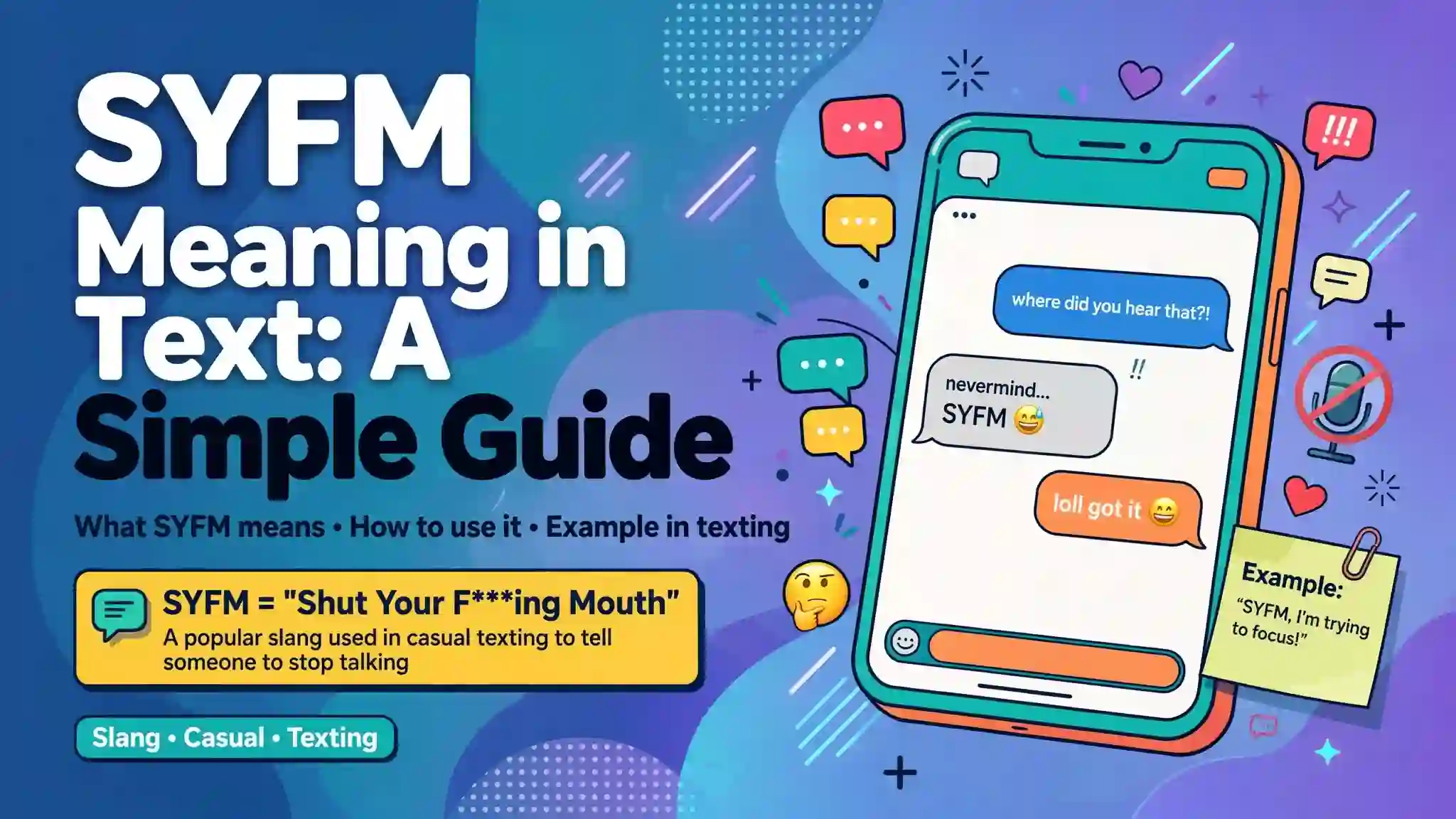
When it comes to online conversations, short slang terms can make messages confusing, especially for beginners. SYFM meaning in text is worth understanding if you often chat on Snapchat, TikTok, Instagram, or other social media platforms. This abbreviation can express a strong reaction, frustration, or a particular attitude, depending on the conversation. Its meaning may also change with the tone and relationship between the people chatting. In this guide, you will learn what SYFM means, how people use it, where it appears, and how to respond. You will also discover examples, similar slang terms, and common mistakes to avoid when using this abbreviation.
What Does SYFM Meaning in Text?
The meaning of an abbreviation often depends on the words behind it and the situation in which someone uses it. Understanding the context helps you avoid confusion.
SYFM commonly stands for “Shut Your Fucking Mouth.” It is a rude and aggressive expression that tells someone to stop talking. People may use it during arguments, heated conversations, or joking exchanges with close friends.
The phrase carries a strong tone. It is much harsher than simply saying “be quiet” or “stop talking.”
For example:
- Person A: “You have no idea what you’re talking about.”
- Person B: “SYFM. You keep making things worse.”
In this conversation, the sender uses SYFM to show anger and frustration.
SYFM Meaning in Texting and Online Chats
Texting has created a culture where people use short expressions to communicate quickly. SYFM is one example of an abbreviation that carries a strong emotional message.
In online chats, people may use it when someone annoys them, makes an unwanted comment, or refuses to stop arguing.
The abbreviation can communicate several feelings:
- Anger: Someone feels upset by another person’s words.
- Frustration: A person wants an annoying conversation to end.
- Annoyance: Someone dislikes repeated comments or unwanted advice.
- Sarcasm: Friends may use it to tease each other.
- Disapproval: A person strongly disagrees with something someone said.
The exact meaning stays connected to the original phrase, but the intention can change with the situation.
SYFM as an Angry Response
People often use SYFM when they feel angry or disrespected. It can appear during online arguments, disagreements, or personal conflicts.
For example:
- “You always blame me for everything. SYFM.”
- “I already explained my side. SYFM and listen.”
- “Stop spreading lies about me. SYFM.”
These messages show irritation and a desire to stop the other person’s comments.
SYFM as a Joke Between Friends
Close friends sometimes use harsh slang without intending to hurt each other. Their friendship, shared humor, and usual communication style can make the phrase sound playful.
For example:
- Friend A: “Your cooking looks like a science experiment.”
- Friend B: “SYFM, at least I tried!”
Here, the sender probably responds with playful frustration rather than serious anger.
Still, you should understand your friend’s sense of humor before using this expression.
SYFM as a Sarcastic Reply
Sarcasm allows people to express frustration through humor or exaggeration. SYFM can become part of this style when someone responds to a silly or unexpected comment.
For example:
- “You think you can beat me at every game? SYFM!”
- “I know you didn’t just say that. SYFM 😂”
How Is SYFM Used on Social Media?
Different social media platforms have their own communication styles. People use abbreviations to make comments, replies, and private messages shorter.
SYFM may appear in direct messages, public comments, group chats, or online discussions. Its meaning generally stays the same across these platforms.
SYFM Meaning on Snapchat
Snapchat encourages quick conversations through snaps and private messages. Users often rely on short slang expressions when replying to friends.
Someone might send SYFM after receiving an annoying message or an unwanted joke.
For example:
- “Bro, SYFM 😂”
- “You keep sending me spoilers. SYFM!”
The first message may sound playful, while the second shows frustration.
SYFM Meaning on TikTok
TikTok users often communicate through comments, video replies, and direct messages. Slang can help people express strong reactions without writing complete sentences.
A person might use SYFM in response to an opinion they dislike or a comment they find offensive.
For example:
- “SYFM, nobody asked for your opinion.”
- “That comment was unnecessary. SYFM.”
SYFM Meaning on Instagram
Instagram supports private messaging, story replies, and public comments. Users may use SYFM when reacting to teasing, arguments, or unwanted messages.
For example:
- “SYFM, you’re making me laugh too much.”
- “Please stop commenting on my pictures. SYFM.”
The first example may show friendly teasing. The second communicates anger.
SYFM Meaning in Gaming Chats
Online gaming often involves fast communication. Players use abbreviations to react quickly during matches or conversations.
SYFM may appear when players argue, tease teammates, or respond to trash talk.
For example:
- “SYFM and focus on the game.”
- “You missed every shot. SYFM 😂”
Gaming communities often use strong language, but that does not mean everyone welcomes it.
Examples of SYFM in Text Messages
Realistic examples make slang easier to understand. The following conversations show how people may use this abbreviation in different situations.
SYFM in Casual Conversations
Friends sometimes use strong expressions as part of their everyday humor. Their relationship helps determine whether the message sounds playful or offensive.
Examples:
- “SYFM, you’re making me blush.”
- “Bro, SYFM! That joke was terrible.”
- “You really think you’re the funniest person here? SYFM 😂”
- “SYFM, I can’t stop laughing.”
- “Don’t expose my secrets. SYFM!”
These examples show playful reactions. However, they work best when both people understand each other’s humor.
SYFM During Arguments
Arguments can make people use direct and aggressive language. SYFM may appear when someone feels insulted or wants another person to stop speaking.
Examples:
- “SYFM. I’m tired of your excuses.”
- “You don’t know the whole story, so stop judging me.”
- “SYFM and leave me alone.”
- “I don’t want to hear another lie from you.”
- “Stop blaming me for your mistakes. SYFM.”
These messages carry a negative tone. They may increase tension instead of resolving a disagreement.
SYFM in Group Chats
Group chats often include jokes, disagreements, and friendly teasing. Members may use slang to react quickly to another person’s message.
Examples:
- “SYFM, nobody believes that story.”
- “You really sent that picture? SYFM 😂”
- “SYFM, you’re embarrassing the whole group.”
- “Someone needs to take your phone away.”
- “SYFM, let me finish my story!”
The group dynamic matters. A phrase that feels funny among close friends may sound disrespectful to someone outside the group.
SYFM in Flirty Conversations
Some people use teasing language when flirting with someone they know well. SYFM may appear as an exaggerated response to a compliment or playful comment.
Examples:
- “SYFM, you’re making me smile too much.”
- “You really think I’m cute? Stop it!”
- “SYFM, don’t make me blush like that.”
- “You’re too confident for someone this cute.”
- “SYFM, you’re going to make me fall for you.”
These examples depend on mutual comfort. Avoid using aggressive slang with someone who may take it seriously.
How to Reply When Someone Sends SYFM
Receiving SYFM can feel confusing or insulting, especially if you have never seen the abbreviation before. Your response should depend on the sender’s tone and your relationship with that person.
You do not need to respond aggressively. A calm reply can help you understand the situation and prevent unnecessary conflict.
Funny Replies to SYFM
If a close friend uses the abbreviation jokingly, you can respond with humor.
Try these replies:
- “Make me!”
- “Someone woke up angry today 😂”
- “You love hearing me talk.”
- “Okay, drama queen!”
- “Not you getting offended again.”
- “I’ll talk even louder now!”
These replies work best when both people enjoy playful teasing.
Calm Replies to SYFM
If someone sounds annoyed, a calm response may help settle the conversation.
You can say:
- “Okay, I’ll give you some space.”
- “I didn’t mean to upset you.”
- “Let’s talk when we’re both calm.”
- “I understand that you’re frustrated.”
- “Can you explain what bothered you?”
- “I’m not trying to argue with you.”
These responses show maturity without creating more tension.
Firm Replies to SYFM
Sometimes, the sender crosses a boundary. You can respond firmly without insulting them.
Consider these replies:
- “Please speak to me respectfully.”
- “There’s no need to be rude.”
- “I won’t continue this conversation if you insult me.”
- “You can disagree without using that language.”
- “Let’s keep this conversation respectful.”
You have every right to end a conversation that makes you uncomfortable.
Difference Between SYFM and Similar Texting Slang
Online slang includes many expressions that communicate anger, frustration, or a desire to stop talking. However, these abbreviations do not always have the same meaning or level of intensity.
Understanding their differences can help you choose the right expression.
SYFM vs STFU
Both abbreviations tell someone to stop talking. However, SYFM includes an extra word that makes its tone more aggressive.
- SYFM: Shut Your Fucking Mouth.
- STFU: Shut The Fuck Up.
Both expressions are rude. Their exact impact depends on the conversation and relationship between the people involved.
SYFM vs STFD
STFD usually stands for “Shut The Fuck Down” in certain online contexts, although its meaning can vary. It does not serve as a standard replacement for SYFM.
SYFM directly tells someone to stop talking, while STFD may suggest stopping an activity or ending a discussion.
Always check the surrounding message before assuming their meanings are interchangeable.
SYFM vs Be Quiet
“Be quiet” is a simple and generally polite instruction. SYFM uses profanity and sounds much more aggressive.
Compare these examples:
- “Please be quiet while I’m working.”
- “SYFM. I’m trying to concentrate.”
The first sentence sounds respectful. The second sounds hostile or highly informal.
SYFM vs Zip It
“Zip it” is an informal way to tell someone to stop talking. People often use it jokingly or playfully.
SYFM carries a much stronger tone because it includes profanity.
If you want a lighthearted expression, “zip it” is usually a safer choice.
Is SYFM Rude or Offensive?
Language can affect how people feel during a conversation. Some abbreviations sound harmless, while others carry insults or aggressive meanings.
SYFM is generally considered rude because it contains profanity and directly tells someone to stop speaking.
The expression may offend someone even when the sender intends it as a joke.
Consider these factors before using it:
- Your relationship: Close friends may understand your humor better than strangers.
- The situation: A serious argument is not a good time for aggressive slang.
- The audience: Professional conversations require respectful language.
- The person’s feelings: Someone may dislike profanity even in casual chats.
- The delivery: A joking message can still hurt someone if it crosses a personal boundary.
You should also consider the communication platform. A private joke between friends differs from a public comment directed at a stranger.
If you are unsure how someone will react, choose a softer expression.
When Should You Use SYFM in Text Messages?
Knowing an abbreviation’s meaning is only part of understanding it. You should also know when it makes sense to use it and when to avoid it.
SYFM is not suitable for every conversation. Its aggressive tone makes it a poor choice for formal, professional, or sensitive discussions.
Situations Where Friends May Use It
Close friends may use SYFM during playful arguments, jokes, or casual conversations.
For example, someone might tease a friend about a silly mistake. The friend may reply with SYFM to show exaggerated annoyance.
This kind of exchange depends on mutual understanding. Both people should feel comfortable with the language.
Situations Where You Should Avoid It
Avoid using SYFM in these situations:
- Professional emails and workplace chats.
- Conversations with teachers or managers.
- Serious disagreements with family members.
- Messages to people you barely know.
- Public comments directed at strangers.
- Sensitive conversations involving personal problems.
A rude expression can damage trust and make a small disagreement much worse.
Better Alternatives to SYFM
If you want to express frustration without sounding offensive, consider these alternatives:
- “Please stop talking.”
- “Can we change the subject?”
- “Give me a moment.”
- “Let’s drop this conversation.”
- “I don’t want to argue.”
- “That’s enough for now.”
- “Please respect my opinion.”
- “Let’s talk about something else.”
These expressions help you communicate clearly without unnecessary hostility.
Common Mistakes People Make When Understanding SYFM
Slang can create confusion because people often use abbreviations without explaining them. A small misunderstanding can change the meaning of an entire conversation.
Here are some common mistakes to avoid.
Assuming Every Message Is Serious
Not everyone uses SYFM to express genuine anger. Some friends use it as playful teasing.
However, you should not automatically assume the sender is joking. Check the surrounding messages and their usual communication style.
Ignoring the Relationship
The same abbreviation can sound different depending on who sends it.
A close friend may use it jokingly, while a stranger may use it as a direct insult.
Your relationship with the sender can help you understand their intention.
Using It in Professional Conversations
Some people use texting slang everywhere because they communicate casually online. However, strong profanity does not belong in most professional conversations.
Use respectful alternatives when messaging coworkers, clients, teachers, or managers.
Confusing It With Similar Abbreviations
Many slang expressions share similar meanings. However, their wording and intensity can differ.
Do not assume SYFM, STFU, and other expressions mean exactly the same thing in every situation.
Ignoring the Emotional Tone
The surrounding words, punctuation, and emojis can provide useful clues.
For example, a laughing emoji may suggest playful teasing. An angry message with aggressive language may suggest a genuine argument.
Always consider the complete conversation before responding.
Why Do People Use Abbreviations Like SYFM?
Text abbreviations have become a regular part of digital communication. They help people express reactions quickly, especially when typing on mobile devices.
Some abbreviations also become popular because of online communities, memes, gaming culture, and social media trends.
People may use SYFM for several reasons:
- Speed: Short abbreviations take less time to type.
- Emotion: Strong expressions can communicate frustration quickly.
- Humor: Friends may use aggressive slang as exaggerated teasing.
- Internet culture: Users often copy expressions they see in comments and videos.
- Group identity: Certain slang terms become familiar within specific online communities.
However, short messages can remove important emotional details. A person may struggle to understand whether the sender is angry, joking, or being sarcastic.
That is why context remains important when reading internet slang.
Frequently Asked Questions
What does SYFM stand for in texting?
SYFM commonly stands for “Shut Your Fucking Mouth.” People use it to tell someone to stop talking. It usually sounds rude, aggressive, or sarcastic.
Is SYFM a bad word?
Yes. SYFM contains profanity, so many people consider it offensive. Some close friends may use it jokingly, but it can upset someone who dislikes strong language.
What does SYFM mean on Snapchat?
On Snapchat, SYFM generally has the same meaning as in regular texting. Users may send it during arguments, playful teasing, or conversations where someone feels annoyed.
Is SYFM the same as STFU?
They have similar meanings because both expressions tell someone to stop talking. However, their wording differs. Both contain profanity and can sound disrespectful.
How should I respond when someone texts SYFM?
Your response depends on the situation. You can reply with humor if a friend is joking. If someone sounds angry, stay calm or ask what caused the problem. You can also set boundaries if the message feels offensive.
Can I use SYFM with my friends?
You can use it if your friends understand your humor and feel comfortable with strong language. However, avoid using it with people who may misunderstand your intention or find profanity offensive.
Conclusion
Understanding SYFM meaning in text can help you follow conversations on Snapchat, TikTok, Instagram, and other online platforms. The abbreviation commonly stands for “Shut Your Fucking Mouth.” People use it to express anger, annoyance, frustration, or playful teasing.
Remember that SYFM contains strong profanity. It is not suitable for professional messages or serious conversations where respectful language matters. If someone sends it to you, consider the context before reacting. You can respond with humor, stay calm, or set a clear boundary if the message feels offensive.
