


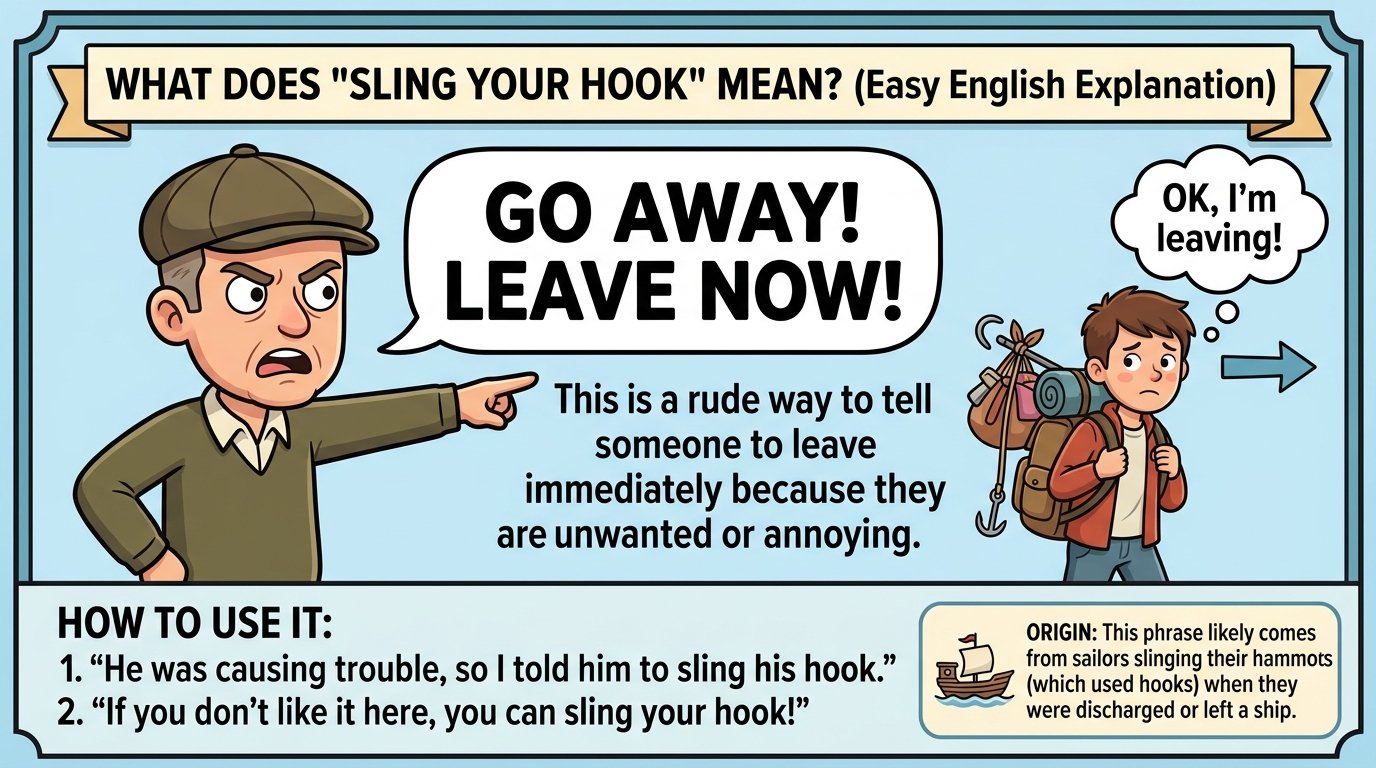
The sling your hook meaning is an informal expression that means “go away,” “leave,” or “get going.” It is especially associated with British English and is usually used in casual conversations.
If you have come across “sling your hook” in a text message, social media post, movie, book, or everyday conversation, you may wonder what this unusual phrase actually means. The expression is not normally meant literally. Instead, it is an idiomatic way of telling someone to leave.
In this article, we will explain the sling your hook meaning in English, slang, text messages, and social media, along with its origin, examples, similar expressions, and common ways to use it.
What Is the Sling Your Hook Meaning?
The sling your hook meaning is simply to leave, go away, or move along. It is an informal British expression that can be used when someone wants another person to stop hanging around.
The phrase can have different tones depending on the situation. Friends might use it jokingly, while someone who is annoyed may use it as a direct way of telling another person to leave.
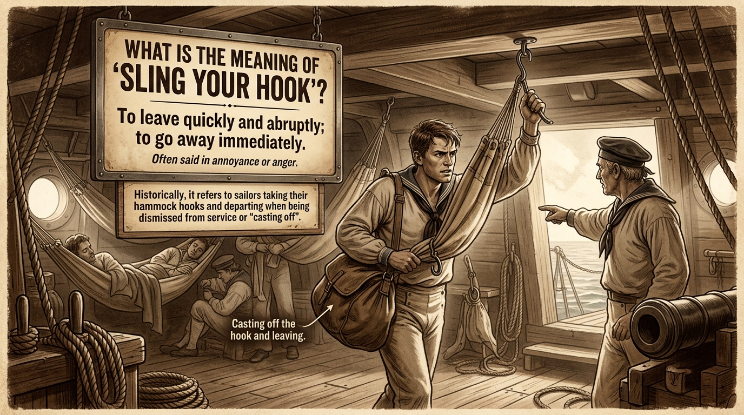
Some common meanings of “sling your hook” include:
- Go away
- Leave
- Get going
- Move along
- Clear off
- Stop hanging around
- Leave me alone
For example:
“You’ve been here all morning. Sling your hook!”
This means:
“You’ve been here all morning. Now leave!”
Why Does Sling Your Hook Have This Meaning?
The expression sling your hook has been used in British informal English for many years. Its exact origin is uncertain, and different explanations have been suggested for how the phrase developed.
The word sling can mean to throw or carry something, while hook has appeared in older slang and idiomatic expressions. Over time, the complete phrase developed the figurative meaning of telling someone to leave.
Today, people generally understand sling your hook as an informal way of saying “go away” rather than interpreting the words literally.
Common Sling Your Hook Meanings in Texting and Social Media
When someone uses sling your hook in a text message or social media conversation, the meaning is usually “go away” or “leave.”
It is not normally a texting abbreviation like LOL, BRB, or IDK. Instead, it is a complete informal expression that someone may use to sound humorous, sarcastic, or direct.
The tone can depend on the conversation.
- It can be playful between friends.
- It can be used sarcastically.
- It can express annoyance.
- It can tell someone to leave.
- It may sound rude in a serious argument.
- It is especially associated with British English.
For example:
“You want the last piece of cake? Sling your hook!”
Here, the speaker may simply be joking with a friend.
Sling Your Hook Meaning in Slang
The sling your hook meaning in slang is “go away,” “clear off,” or “leave.” It is an informal expression rather than a modern internet abbreviation.
The phrase is particularly associated with British colloquial speech. Depending on the tone, it can range from friendly teasing to a fairly blunt dismissal.
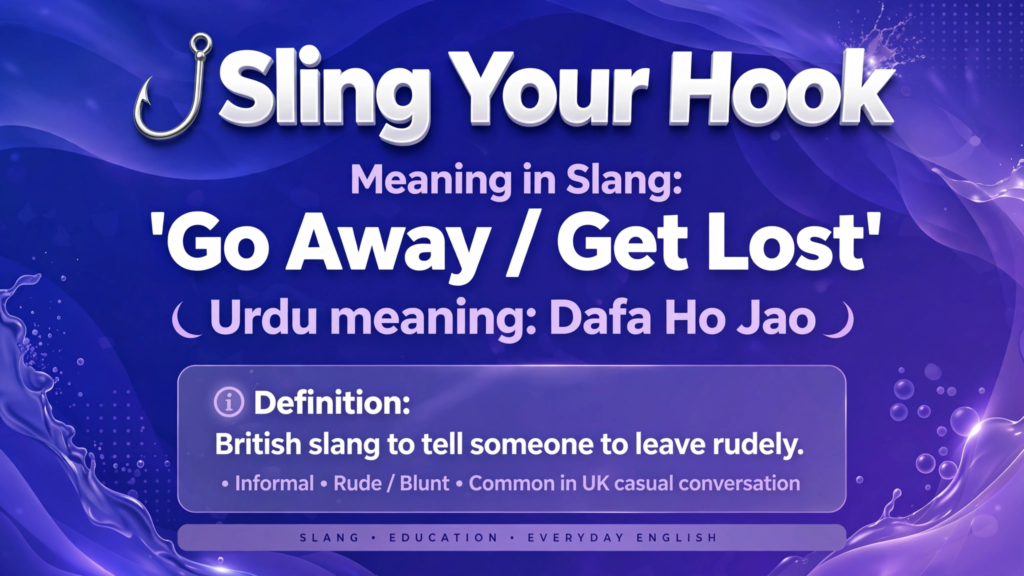
When someone says “sling your hook,” they normally want the other person to stop hanging around or leave the situation.
- Basic meaning: Go away.
- Tone: Informal and sometimes rude.
- Language: Mainly British English.
- Usage: Casual conversations and informal writing.
- Texting: Not an abbreviation.
- Context: Can be humorous, sarcastic, or serious.
Sling Your Hook Meaning in Text
The sling your hook meaning in text is generally the same as its standard English meaning. If someone sends this phrase in a message, they are usually telling another person to leave or go away.
The surrounding conversation helps determine whether it is meant seriously or as a joke.
For example:
“I’m trying to finish my homework, so sling your hook!”
The sender means:
“Please go away because I am trying to work.”
Another person might write:
“Sling your hook! I’m not sharing my fries.”
In this case, it could simply be playful teasing.
Sling Your Hook Meaning in English
The sling your hook meaning in English is to leave or go away. It is considered an informal idiomatic expression.
The phrase is most closely connected with British English and may sound unusual to people who are more familiar with American English.
For example:
“The manager told the troublemakers to sling their hooks.”
This means the manager told them to leave.
Because the expression is informal, it is more suitable for casual speech, humorous writing, fictional dialogue, or familiar conversations than formal communication.
Sling Your Hook Meaning in British English
In British English, sling your hook is a colorful way of telling someone to leave.
Similar British expressions include:
- Clear off
- Get lost
- Push off
- Be off
- Move along
- Get going
The phrase can sound somewhat old-fashioned or humorous today, which is why it is often noticed in British films, television programs, books, and casual speech.
Sling Your Hook Meaning on Social Media
The sling your hook meaning on social media is normally still “go away” or “leave.”
People may use it in posts, comments, captions, or private messages.
For example:
“Don’t like my opinion? Sling your hook!”
This means:
“If you don’t like my opinion, go away.”
On social media, the phrase can be used humorously or sarcastically, but it can also sound confrontational depending on the wording around it.
Sling Your Hook Meaning in Text Messaging
The sling your hook meaning in text messaging does not usually have a special hidden definition. It remains an informal expression meaning “leave” or “go away.”
Unlike common texting terms such as “LOL” or “BTW,” it is not an acronym or abbreviation.
For example:
“I’ve got an early morning tomorrow. Sling your hook!”
This means:
“Please leave because I need to go to sleep.”
Sling Your Hook Meaning in Different Contexts
The meaning is generally consistent, but the tone can change according to the situation.
In Everyday Conversation
It means telling someone to leave or go away.
Between Friends
It may be used as playful teasing.
During an Argument
It can sound rude, angry, or dismissive.
In Movies and Books
It can help create an informal British style of dialogue.
On Social Media
It may be used sarcastically, humorously, or seriously.
What Does Sling Your Hook Mean When Someone Says It to You?
If someone tells you to “sling your hook,” they are telling you to leave or go away.
It is normally figurative rather than literal. They are not actually asking you to throw a hook.
For example:
“You’ve caused enough trouble. Sling your hook!”
The speaker wants the other person to leave.
However, if a friend says:
“Sling your hook, I’m saving this chocolate for myself!”
the expression may simply be playful.
Examples of Sling Your Hook in Sentences
Here are some examples that show how sling your hook can be used.
Example 1: Asking Someone to Leave
“It’s getting late, so sling your hook.”
Meaning: Leave or go home.
Example 2: Friendly Teasing
“You think you’re getting my last cookie? Sling your hook!”
Meaning: Go away, but in a joking way.
Example 3: An Angry Situation
“I’ve had enough of this argument. Sling your hook!”
Meaning: Leave me alone.
Example 4: British Conversation
“The owner told the noisy customers to sling their hooks.”
Meaning: The owner told them to leave.
Example 5: Text Message
“Sling your hook and let me watch the movie!”
Meaning: Go away and stop bothering me.
Is Sling Your Hook a Positive or Negative Expression?
The phrase sling your hook is usually direct and can sound negative because it tells someone to leave.
However, the expression is not automatically hostile.
For example:
“Sling your hook! You’re not stealing my dessert.”
This may be nothing more than friendly joking.
In contrast:
“Sling your hook and don’t come back.”
is clearly much more dismissive.
Therefore, the relationship between the speakers and the tone of the conversation are important.
Common Mistakes People Make When Using Sling Your Hook
Because the phrase sounds unusual, learners can misunderstand it.
Mistake 1: Taking the Phrase Literally
“Sling your hook” normally does not mean physically throwing a fishing hook.
Mistake 2: Thinking It Is a Texting Abbreviation
It is not an acronym or abbreviation. It is an informal idiomatic expression.
Mistake 3: Using It in Formal Situations
The phrase can sound rude or overly casual, so it is not suitable for most formal communication.
Mistake 4: Assuming It Is Always Angry
Friends can use it jokingly, so the phrase does not always indicate genuine anger.
Mistake 5: Forgetting Its British Usage
The expression is particularly associated with British English and may be less familiar to some international English speakers.
How to Know When to Use Sling Your Hook
Before using sling your hook, think about the situation and your relationship with the person.
Think About the Tone
If you say it seriously, it can sound blunt or rude.
Think About the Person
It is more appropriate with friends or in casual situations than with strangers or professional contacts.
Think About the Setting
Avoid using it in formal emails, business communication, or official situations.
Think About Your Meaning
If you simply want to politely ask someone to leave, a phrase such as “Could you please leave?” is clearer and more respectful.
Is Sling Your Hook Slang or an Idiom?
Sling your hook is best described as an informal British idiom or colloquial expression.
Some people may casually call it British slang because it is informal, but it is not a modern texting slang term.
The phrase is generally used to mean:
- Go away
- Leave
- Clear off
- Get going
- Move along
Its informal nature makes it more common in casual speech and dialogue than in formal writing.
Sling Your Hook vs Similar Words and Phrases
Several English expressions have a similar meaning to sling your hook, but their tone may differ.
| Expression | Meaning | Typical Tone |
| Sling your hook | Go away or leave | Informal |
| Go away | Leave | Direct |
| Clear off | Go away | Informal |
| Get lost | Go away | Rude |
| Move along | Continue going | Direct/Mild |
| Get going | Leave or start moving | Casual |
| Leave me alone | Stop bothering me | Direct |
The phrase sling your hook is distinctive because it has a strong informal British flavor.
Formal vs. Informal Use of Sling Your Hook
Sling your hook is mainly an informal expression.
It can be suitable in:
- Casual conversations
- Friendly jokes
- Informal messages
- Social media
- Fiction
- Comedy
- British dialogue
It is generally not appropriate for:
- Business emails
- Academic writing
- Formal requests
- Official communication
- Professional complaints
For formal situations, you could use:
“Please leave the area.”
or:
“I would appreciate some privacy.”
What Is the Origin of Sling Your Hook?
The exact origin of sling your hook is uncertain. The phrase has been associated with British colloquial English for a long time, but there is no single universally accepted explanation for every part of its development.
“Sling” has long been used in English in the sense of throwing or carrying something, while “hook” has appeared in older slang and expressions.
Over time, the combined expression developed its modern figurative meaning: to leave or go away.
Because its precise history is uncertain, it is better to describe the origin as unclear rather than present one unverified explanation as fact.
How Sling Your Hook Became Associated With British Speech
The expression became established as part of informal British speech.
Its unusual wording gives it a colorful quality, which has helped it survive in literature, comedy, films, television, and everyday conversation.
It can sound more playful or old-fashioned than simply saying “go away.”
You may encounter it in:
- British books
- Television shows
- Films
- Comedy
- Informal conversations
- Social media posts
Sling Your Hook Meaning in Modern English
In modern English, sling your hook still means “go away” or “leave.”
Although it is not one of the most common expressions used by all English speakers, it remains recognizable, particularly in British English.
Its meaning can be humorous, sarcastic, or serious depending on the context.
For example:
“You’ve had enough of my time today. Sling your hook!”
The speaker is simply telling the other person to leave.
Frequently Asked Questions About Sling Your Hook Meaning
What does sling your hook mean?
Sling your hook means go away, leave, or get going. It is an informal expression particularly associated with British English.
What does sling your hook mean in text?
The sling your hook meaning in text is generally “go away” or “leave.” It does not normally have a special texting definition.
What is the sling your hook meaning in slang?
The sling your hook meaning in slang is “go away,” “clear off,” or “leave.” It is an informal British expression.
Is sling your hook rude?
It can sound rude or dismissive when used seriously. Between friends, it can also be used as a joke.
Is sling your hook British slang?
The expression is strongly associated with British informal English. It can be described as British slang or, more precisely, an informal British idiom.
What does sling your hook mean in British English?
It means leave, go away, or move along.
Can I use sling your hook in a formal email?
It is better to avoid the expression in formal communication because it is informal and can sound rude.
Is sling your hook still used?
Yes. It remains a recognizable informal expression, particularly in British English, although it may sound somewhat traditional or humorous.
What are the synonyms of sling your hook?
Similar expressions include go away, clear off, get going, move along, get lost, push off, and leave me alone.
Conclusion
The sling your hook meaning is to go away, leave, or get going. It is an informal expression that is particularly associated with British English.
The sling your hook meaning in text is normally the same as its everyday meaning, while the meaning of ” sling your hook ” in slang refers to the informal idea of telling someone to leave.
The phrase can be playful between friends or more dismissive in an argument. Understanding the context and tone is therefore important when interpreting or using sling your hook.
