


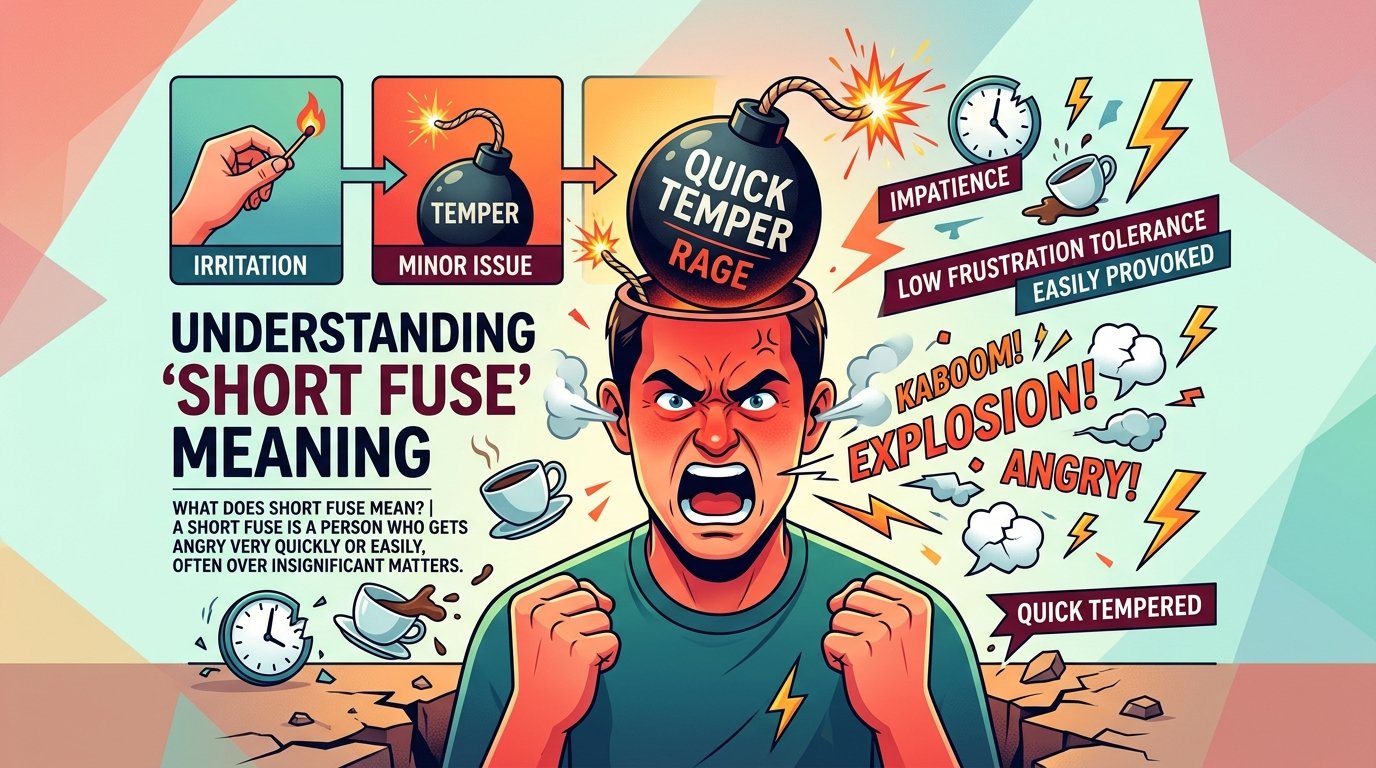
The phrase short fuse is a common English idiom used to describe someone who gets angry, annoyed, or frustrated very quickly. When people say that someone has a short fuse, they mean that the person has a quick temper and may lose patience over small problems, mistakes, delays, or stressful situations. This expression is widely used in everyday conversations and can also be found in text messages, social media posts, movies, TV shows, and casual discussions. The word “fuse” does not refer to an actual fuse in this context; instead, it creates an image of something that burns out quickly, just like a person who quickly reaches the point of anger. sometimes be serious, especially when describing someone who frequently reacts angrily, but it can also be used in a humorous or playful way among friends and family. People may also use the phrase to describe themselves when they know they become impatient or irritated easily. Understanding this expression can help English learners recognize and use it naturally in different situations. In this guide, we will explain its slang meaning, what it means in text, common examples, related expressions, and how to use it correctly in everyday English.
What Is a Short Fuse?
A short fuse is an idiom that describes someone who becomes angry or upset very quickly. The person may have little patience when something goes wrong.
For example, if someone gets angry over a small mistake, you might say, “He has a short fuse.” You are not talking about a real fuse. You are describing the person’s quick temper.
The phrase is usually used in casual conversations. It can describe friends, family members, coworkers, or even yourself.
short fuse meaning slang
The short fuse meaning slang is someone who gets mad or annoyed very easily. It is a casual way to talk about a person’s temper.
When people use this phrase in slang, they often mean that the person can lose their patience very fast. It does not always mean serious anger. Sometimes it can simply mean that someone becomes irritated over small things.
For example:
“Don’t tease him too much. He has a short fuse.”
Here, the speaker is saying that the person can become angry quickly.
what does short fuse mean in text
If someone uses what does short fuse mean in text, the phrase normally means that a person gets angry quickly.
For example:
“My brother has a short fuse.”
This means the brother may become angry or frustrated very easily.
Someone can also use the phrase about themselves:
“Sorry, I have a short fuse today.”
This means the person feels more impatient or irritated than usual.
The phrase is common in text messages because it is short and easy to understand.
Different Meanings of Short Fuse in Everyday English
The main meaning of short fuse is a quick temper. However, people can use it in slightly different situations.
It may describe someone who becomes angry during an argument. It can also describe someone who gets annoyed by delays, mistakes, noise, or other frustrating situations.
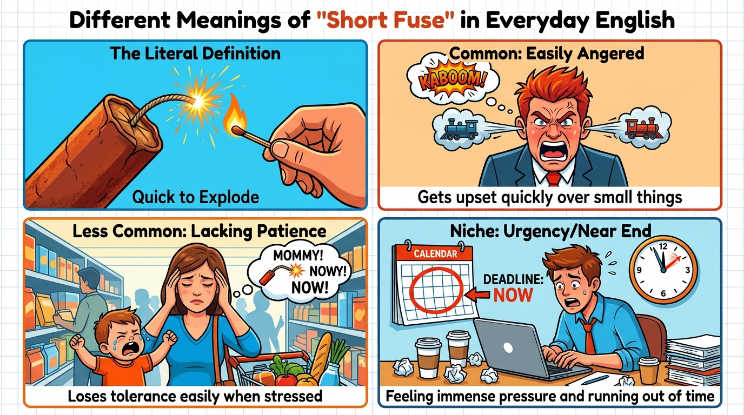
Some common ideas connected with a short fuse are:
- Getting angry quickly
- Losing patience easily
- Becoming irritated over small things
- Reacting strongly to problems
- Having a quick temper
The context usually makes the intended meaning clear.
Short Fuse Meaning in Social Media Conversations
People also use short fuse on social media and in online conversations. It is often used when someone talks about anger, frustration, or impatience.
For example:
“I have a short fuse when my internet stops working.”
This can be a serious statement, but it can also be humorous. The person may simply be saying that slow internet makes them very annoyed.
Another example is:
“He has such a short fuse 😂.”
The emoji can make the statement sound more playful or casual.
Real-World Examples of Short Fuse
Here are some simple examples that show how short fuse is used in real conversations.
Example 1: At Work
“Our manager has a short fuse when people miss deadlines.”
The speaker means that the manager becomes angry quickly when employees do not finish their work on time.
Example 2: With Friends
“Be careful with that joke. Jake has a short fuse.”
Here, the speaker is warning their friend that Jake may get angry easily.
Example 3: At Home
“My dad has a short fuse when the house is too noisy.”
This means that the father becomes irritated quickly when there is too much noise.
Example 4: In a Text Message
“Sorry for getting angry. I had a short fuse today.”
The person is explaining that they became angry more quickly than usual.
Common Mistakes and Misconceptions
One common mistake is thinking that short fuse refers to a real fuse. In this expression, “fuse” is used figuratively. It describes how quickly someone reaches an angry reaction.
Another mistake is thinking that a person with a short fuse is angry all the time. That is not necessarily true. The phrase simply suggests that the person can become angry quickly.
People also sometimes confuse short fuse with being a bad person. Having a quick temper describes behavior, not someone’s entire personality.
Comparison: Short Fuse vs Other Expressions
The phrase short fuse is similar to several other English expressions. However, each one can have a slightly different use.
| Expression | Meaning |
| Short fuse | Gets angry very quickly |
| Short temper | Becomes angry easily |
| Quick temper | Reacts with anger quickly |
| Hot-headed | Often acts or reacts angrily |
| Lose your temper | Become angry |
For example, “He has a short fuse” describes a tendency to become angry quickly. “He lost his temper” describes an actual moment when he became angry.
Is Short Fuse a Negative Expression?
Usually, short fuse has a negative meaning because it suggests that someone has difficulty staying calm.
However, it is not always meant as an insult. Friends may use it jokingly when someone gets annoyed about something small.
For example:
“You have a short fuse when it comes to video games!”
This could simply be a playful comment about someone’s reactions while playing.
The tone and context are important when deciding whether the phrase is serious or humorous.
When Do People Use the Phrase Short Fuse?
People use short fuse when talking about situations that can make someone angry quickly.
You may hear it when people discuss:
- Arguments
- Work stress
- Family problems
- Driving
- Delays
- Criticism
- Small mistakes
- Daily frustrations
For example:
“Traffic brings out my short fuse.”
This means traffic makes the speaker become irritated very quickly.
Why Does Context Matter?
The meaning of short fuse is usually connected to someone’s emotional reaction. But the context tells you how serious the statement is.
If a person says, “My boss has a short fuse,” they may be warning you that the boss gets angry easily.
If someone says, “I have a short fuse when my coffee is late,” they may simply be joking.
So, always look at the full conversation before deciding how the phrase is being used.
FAQ: Understanding Short Fuse Meaning
1. What does short fuse mean?
Short fuse means that someone gets angry or irritated very quickly. It is commonly used to describe a quick temper.
2. What does short fuse mean in slang?
In slang and casual English, short fuse describes someone who gets mad easily or loses patience quickly.
3. What does short fuse mean in text?
In text messages, short fuse usually means that a person becomes angry or annoyed very quickly.
4. Is short fuse always a negative term?
No. It is usually negative, but people can also use it in a joking or playful way.
5. Is short fuse the same as short temper?
They have almost the same meaning. Both describe someone who becomes angry easily or quickly.
6. Can I say I have a short fuse?
Yes. You can use the phrase to describe your own temper.
For example:
“I know I have a short fuse sometimes.”
7. What is the opposite of having a short fuse?
The opposite would be having a calm or patient temper. A calm person usually does not become angry quickly.
Conclusion
The short fuse meaning is simple. It describes a person who becomes angry, frustrated, or irritated very quickly. The phrase is common in everyday English, texting, and social media. It is usually used to describe a quick temper, but it can also be used humorously. Understanding the context will help you know exactly what someone means when they say short fuse.
